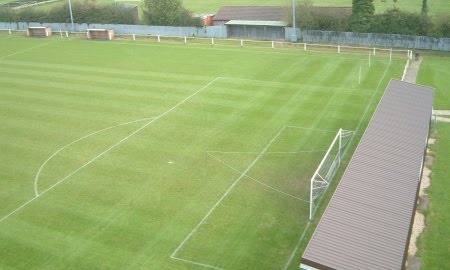
Figueirense come from the Southern Brazilian city of Florianópolis - capital of the island state of Santa Catarina. It's is one of the beachiest regions in Brazil, with 42 in the city alone. No wonder that with some of the few West-facing series of beaches in the country that it's become one of the most populat surfing destinations on the South American continent. The team formed in 1921 as Figueirense Foot-ball Club, although they thankfully Braziled it up a few years later.
Their first big flush of success was in the 1930s, when they won five state titles (this was long before the days when there was a national football league), winning it again in 1941. This was when their early run of wins ended, though, and it was another 31 years before they won their next title. But things soon picked up again in the seventies and eighties, and in total they've won their state title a total of 15 times. The best that they've done since the game has gone national is a couple of runner's-up slots, in the Campeonato Brasileiro Série B in 2001, and the Copa do Brasil in 2007.
They've since returned to Série B, the second tier of Brazilian football, where they have spent most of their career, playing in the 19,908 capacity Orlando Scarpelli stadium. As you may have guessed by their name, they are rather a fig-based club. Comeing from the neighbourhood of, Figueirense, which means Of The Fig Tree, they have a fig tree on their club crest, their nickname is The Fig Tree, and their club mascot is even an anthropomorphised fig tree called Figueirinha, who is, to be absolutely honest, slightly frightening.
All photos © lays with the owners
Videos from YouTube. Underlying © lays with the owners of the clips.
Showing posts with label Football. Show all posts
Tuesday, 10 August 2010
Sunday, 8 August 2010
Brunswick Zebras (Australia)
Another of Australia's abundant Zebras, the history of the Brunswick variety runs parallel to that of another club on this list, Whittlesea Zebras. But despite the latter club being born from the former, they are now both distinct and different clubs. Formed in 1948 as Juventus, they were one of many clubs to be made up of Italian migrants to Australia who wanted to keep a bit of the old country alive in their distant new home.
Theres is a pretty dense and winding history, so sit down and start taking notes, as it may be tricky to keep up. Hailing from the Melbourne suburb of Brunswick, they were themselves the product of the merger of a number of smaller clubs, and by the 1950s had become the powerhouse of football in Victoria, winning six state titles in that decade - five of them consecutively. In total they won that title eight times in their history, bagging five Dockerty Cups along the way. In 1980 they amended their name to Brunswick Juventus, and pretty soon joined the ranks of the National Soccer League in 1984. Here they reached play-off finals in their debut season, before winning the whole caboodle in 1985, beating Sidney City over two legs in the Grand Final to become national champions.
Sadly this was the peak of their career, and they began a decline that would see them return to the Victoria League by the end of the decade. In 1993 they briefly returned to the NSL as the Brunswick Pumas - a name change soon followed by another to Melbourne Zebras, before ill-health finally led them to merge with two other clubs to become Bulleen Zerbras in 1996. But when the club merged with Whittlesea Stallions to become the Whittlesea Zebras in 2007, an offshoot group kept the old club going, and in 2008 changed their name one last time to Brunswick Zebras.
They now play in the Victoria Provisional League Three North-West League, and play their home games at the charming Sumner Park. There's is a convoluted and complex history that has seen great highs and sad lows. But that they are still playing and keeping the time line alive is of great credit to everyone involved in the club.
All photos © lays with the owners
Videos from YouTube. Underlying © lays with the owners of the clips.
Theres is a pretty dense and winding history, so sit down and start taking notes, as it may be tricky to keep up. Hailing from the Melbourne suburb of Brunswick, they were themselves the product of the merger of a number of smaller clubs, and by the 1950s had become the powerhouse of football in Victoria, winning six state titles in that decade - five of them consecutively. In total they won that title eight times in their history, bagging five Dockerty Cups along the way. In 1980 they amended their name to Brunswick Juventus, and pretty soon joined the ranks of the National Soccer League in 1984. Here they reached play-off finals in their debut season, before winning the whole caboodle in 1985, beating Sidney City over two legs in the Grand Final to become national champions. Sadly this was the peak of their career, and they began a decline that would see them return to the Victoria League by the end of the decade. In 1993 they briefly returned to the NSL as the Brunswick Pumas - a name change soon followed by another to Melbourne Zebras, before ill-health finally led them to merge with two other clubs to become Bulleen Zerbras in 1996. But when the club merged with Whittlesea Stallions to become the Whittlesea Zebras in 2007, an offshoot group kept the old club going, and in 2008 changed their name one last time to Brunswick Zebras.
They now play in the Victoria Provisional League Three North-West League, and play their home games at the charming Sumner Park. There's is a convoluted and complex history that has seen great highs and sad lows. But that they are still playing and keeping the time line alive is of great credit to everyone involved in the club.
All photos © lays with the owners
Videos from YouTube. Underlying © lays with the owners of the clips.
Colby AFC (Isle of Man)
Colby AFC are a club from the tiny Manx village of Colby, in the South-West of the Isle of Man - an island in the North of the Irish Sea almost equidistant between all four countries of the United Kingdom. Despite Man's location, it is a self-governing British Crown Dependency, and as such isn't considered part of the UK.
No Colby isn't exactly a massive place. With a head count of only 289, they are perhaps the smallest settlement on this list to have a football club. They were formed in 1919, and currently play in the Manx Premier League, after winning the league's Second Division in 2008. They won that title with an incredible record, winning every game bar one, which they drew, and finishing with a goal tally of 153 goals in 26 games.
Despite the smallness of their home village, they've got a pretty decent track record in Manx football. As well as that great league campaign in 2008, they won the Manx Cup in 1928, The Woods Cup on five occasions and the Paul Henry Gold Cup four times. Nicknamed The Moonlighters, they play at the titchy Glen Road ground in the North of the village - although in a place that small, the compass points have very little relevance.
All photos © lays with the owners
Videos from YouTube. Underlying © lays with the owners of the clips.
No Colby isn't exactly a massive place. With a head count of only 289, they are perhaps the smallest settlement on this list to have a football club. They were formed in 1919, and currently play in the Manx Premier League, after winning the league's Second Division in 2008. They won that title with an incredible record, winning every game bar one, which they drew, and finishing with a goal tally of 153 goals in 26 games.
Despite the smallness of their home village, they've got a pretty decent track record in Manx football. As well as that great league campaign in 2008, they won the Manx Cup in 1928, The Woods Cup on five occasions and the Paul Henry Gold Cup four times. Nicknamed The Moonlighters, they play at the titchy Glen Road ground in the North of the village - although in a place that small, the compass points have very little relevance.
All photos © lays with the owners
Videos from YouTube. Underlying © lays with the owners of the clips.
Labels:
black and white,
Colby,
Colby AFC,
Football,
Glen Road,
Isle of Man,
Manx,
Manx Premier League
Abbotsford Mariners (Canada)
The Mariners are a Canadian club from the city of Abbotsford in British Colombia. Strictly speaking it's part of the wider Vancouver Metropolitan Area, although is a distinct and seperate city. Despite their Canadian nationality, they currently sit in the USL Premier Development League - the fourth tier of the US football league system - where they play in the Northwest Division of the Western Conference, alongside teams like British Colombia and the Washington and Oregon states in the USA.
Despite football being popular as a played sport in this part of the world, there's is not a long history. The club was formed in 2003, as Abbotsford Rangers, changing it in 2007 to represent the parent organisation who owned their franchise. Before their foundation there had been a few clubs in the area battling to get accepted into the PDL, including the quaintly-named Abbotsford 86ers Select, and Abbotsford Athletes in Action. In all their eight seasons they've been constant mid-table warriors, except in 2006, when they were division champions, making it as far as the Conference semi-final play-offs. Sadly they went no further after they were beaten 3-2 by California's Orange County Blue Star, despite being two goals up at one point.
They play their home games at the 1200 capacity Bateman Park stadium, that they share with the Fraser Valley Cascades college team. Despite the size of their ground, and indeed their catchment area, they only average gates of around 150, and these have been declining season-on-season, despite the decent football being played. It must be remembered though that if anything, football is the fourth sport in the area, so hopefully their gates will start rising as the popularity of the game increases locally.
All photos © lays with the owners
Videos from YouTube. Underlying © lays with the owners of the clips.
Despite football being popular as a played sport in this part of the world, there's is not a long history. The club was formed in 2003, as Abbotsford Rangers, changing it in 2007 to represent the parent organisation who owned their franchise. Before their foundation there had been a few clubs in the area battling to get accepted into the PDL, including the quaintly-named Abbotsford 86ers Select, and Abbotsford Athletes in Action. In all their eight seasons they've been constant mid-table warriors, except in 2006, when they were division champions, making it as far as the Conference semi-final play-offs. Sadly they went no further after they were beaten 3-2 by California's Orange County Blue Star, despite being two goals up at one point.
They play their home games at the 1200 capacity Bateman Park stadium, that they share with the Fraser Valley Cascades college team. Despite the size of their ground, and indeed their catchment area, they only average gates of around 150, and these have been declining season-on-season, despite the decent football being played. It must be remembered though that if anything, football is the fourth sport in the area, so hopefully their gates will start rising as the popularity of the game increases locally.
All photos © lays with the owners
Videos from YouTube. Underlying © lays with the owners of the clips.
Fisher FC (England)
Fisher are at the same time one of the newest and one of the most historic of all London's non-league clubs. Fisher FC were only founded in 2009, but they rose from the ashes of a famous name in the capital's football, Fisher Athletic. The new club was founded by members of the Fisher Supporter's Trust when Fisher Athletic were wound up in the High Court after serious financial difficulties. They were immediately accepted into the Kent League, the ninth tier on the pyramid, although they had been used to playing at a much higher level in recent years.
Fisher Athletic were formed back in 1908 by the head of the Dockland School in Bermondsey, to provide sporting facilities for the under-priviledged youth of what was a very run down area at the time. They were named after the Catholic martyr Saint John Fisher, one of many churchmen executed by king Henry VIII after refusing to recognise him as the head of the head of the Church of England. They spent most of their more recent years in the upper echelons of the non-league system, getting as high as the National Conference, the highest level of English non-league football, after winning the Southern League in 1987. They stayed there for four years, but it was perhaps this run in the big time that started their financial decline.
Coming from a city with some of the biggest clubs in the world, and being based only a short hop down the Thames from the well-supported Millwall, they have always struggled to get decent crowds, and their march up the leagues wasn't met with as corresponding swelling of gates. After a very successful season in 2008 that saw them reach the Conference South play-offs, an exodus of players moving to richer clubs followed, and their fortunes took a dive. The following season, massive debts piled up, and players were paid between November and the date of a final winding up order in March. the High Court held it up until the end of the season so that the club could fulfil its fixtures.
The newly reformed club play at Fisher Athletic's recent home, in a ground share at Dulwich Hamlet's Champion Hill Stadium, once one of the biggest grounds in the non-league with attendences of up to 20,00 in its prime. But these days they are limited to a far less windswept 3000. Despite having to start a few levels lower down the pyramid than they are used to, it will be interesting to see if the new club can maintain its momentum and work their way back to the level they clearly feel they deserve. Good luck to them on their travels.
All photos © lays with the owners
Videos from YouTube. Underlying © lays with the owners of the clips.
Fisher Athletic were formed back in 1908 by the head of the Dockland School in Bermondsey, to provide sporting facilities for the under-priviledged youth of what was a very run down area at the time. They were named after the Catholic martyr Saint John Fisher, one of many churchmen executed by king Henry VIII after refusing to recognise him as the head of the head of the Church of England. They spent most of their more recent years in the upper echelons of the non-league system, getting as high as the National Conference, the highest level of English non-league football, after winning the Southern League in 1987. They stayed there for four years, but it was perhaps this run in the big time that started their financial decline.
Coming from a city with some of the biggest clubs in the world, and being based only a short hop down the Thames from the well-supported Millwall, they have always struggled to get decent crowds, and their march up the leagues wasn't met with as corresponding swelling of gates. After a very successful season in 2008 that saw them reach the Conference South play-offs, an exodus of players moving to richer clubs followed, and their fortunes took a dive. The following season, massive debts piled up, and players were paid between November and the date of a final winding up order in March. the High Court held it up until the end of the season so that the club could fulfil its fixtures.
The newly reformed club play at Fisher Athletic's recent home, in a ground share at Dulwich Hamlet's Champion Hill Stadium, once one of the biggest grounds in the non-league with attendences of up to 20,00 in its prime. But these days they are limited to a far less windswept 3000. Despite having to start a few levels lower down the pyramid than they are used to, it will be interesting to see if the new club can maintain its momentum and work their way back to the level they clearly feel they deserve. Good luck to them on their travels.
All photos © lays with the owners
Videos from YouTube. Underlying © lays with the owners of the clips.
Northern AFC (New Zealand)
Northern claim to be the oldest continually existing club in New Zealand, having been formed in 1888. In fact, that establishment date also makes them older than any club in Australia too, which would make them the most aged team for many thousand miles in any direction. They are based in the city of Dunedin, situated right near the bottom of South Island, making them the most southerly of all the clubs who play in black and white stripes.
They are currently members of the Football South Premier League, the highest level of football on South Island, and effectively one level below the franchised New Zealand Football Championship, where they play alongside another seven clubs from the city - although their Garden Grounds stadium is based in the North East Valley suburb, a fair way from the centre of town.
And they've got some history behind them too. In 1962, the tobacco company Rothmans sponsored the first national inter-club series, featuring a kind of champion's league affair where the regional champions of the main urban districts played each other to decide the first true national champions. Northern made the final and beat Eastern Suburbs 3-2 in a two-leg final. This made them the very first national champions of New Zealand. They've also got good history in the Chatham Cup, the nation's premier knockout tournament, which they won in both 1959 and 1961 - although they've also been runners up on a massive six occasions.
All photos © lays with the owners
Videos from YouTube. Underlying © lays with the owners of the clips.
They are currently members of the Football South Premier League, the highest level of football on South Island, and effectively one level below the franchised New Zealand Football Championship, where they play alongside another seven clubs from the city - although their Garden Grounds stadium is based in the North East Valley suburb, a fair way from the centre of town.
And they've got some history behind them too. In 1962, the tobacco company Rothmans sponsored the first national inter-club series, featuring a kind of champion's league affair where the regional champions of the main urban districts played each other to decide the first true national champions. Northern made the final and beat Eastern Suburbs 3-2 in a two-leg final. This made them the very first national champions of New Zealand. They've also got good history in the Chatham Cup, the nation's premier knockout tournament, which they won in both 1959 and 1961 - although they've also been runners up on a massive six occasions.
All photos © lays with the owners
Videos from YouTube. Underlying © lays with the owners of the clips.
Haro Deportivo (Spain)
Club Haro Deportivo are based in the town of Haro in Northern Spain, smack in the middle of the wine growing region of La Rioja. Indeed, so bonkers for wine are the locals that the annual Haro Wine Festival always ends up in a massive wine fight called the Batalla del Vino where the locals all arm themselves withe massive water pistols and turn each other pink with the booze. So it's perhaps unsurprising to learn that their fans are notoriously and pleasantly bonkers too.
The club formed in 1914, when a group of locals who admired the popular clubs of the Basque Country just to their North decided they wanted in on the fun. For the first few years they played unregulated matches on a pitch in the middle of a field used for grain threshing - and to this day their ground is named after that place - El Mazo, or The Corn. There is another theory as to the ground's name, that its direct translation - The Deck - refers to the shape of one of the stands, but it's not anywhere near as interesting. It wasn't until 1921 that they were accepted into the Spanish FA and started to play in more orgainised leagues.
They currently play in Tercera División - Group 16 - one of the tougher groupings in the Spanish game's fourth level, and their historic El Mazo ground holds a pleasant 4000 happy wine-drinking fans. They have played in the Tercera División almost every year since the 1960s. Their one glory year though came in the 2004/05 season when, after coming fourth the season before, they had just the one year in Segunda División B. Sadly the excitement soon shriveled to disappointment as they finished plumb last. But that one season has given them hope that perhaps one day they can do it again. And I'm sure everyone would drink to that.
All photos © lays with the owners
Videos from YouTube. Underlying © lays with the owners of the clips.
The club formed in 1914, when a group of locals who admired the popular clubs of the Basque Country just to their North decided they wanted in on the fun. For the first few years they played unregulated matches on a pitch in the middle of a field used for grain threshing - and to this day their ground is named after that place - El Mazo, or The Corn. There is another theory as to the ground's name, that its direct translation - The Deck - refers to the shape of one of the stands, but it's not anywhere near as interesting. It wasn't until 1921 that they were accepted into the Spanish FA and started to play in more orgainised leagues.
They currently play in Tercera División - Group 16 - one of the tougher groupings in the Spanish game's fourth level, and their historic El Mazo ground holds a pleasant 4000 happy wine-drinking fans. They have played in the Tercera División almost every year since the 1960s. Their one glory year though came in the 2004/05 season when, after coming fourth the season before, they had just the one year in Segunda División B. Sadly the excitement soon shriveled to disappointment as they finished plumb last. But that one season has given them hope that perhaps one day they can do it again. And I'm sure everyone would drink to that.
All photos © lays with the owners
Videos from YouTube. Underlying © lays with the owners of the clips.
Labels:
Batalla del Vino,
black and white,
Football,
Haro,
Haro Deportivo,
La Rioja,
Spain
Saturday, 7 August 2010
Hanwell Town FC (England)
Hanwell Town may be based in the West London suburb of Perivale, but their hearts are well and truly planted in the North-East. They were formed in the nearby suburb of Hanwell, as their name would suggest, in 1920, by group of exiled Newcastle United fans working in the area. So it was no surprise to anyone when they decided what strip they should play in. And funnily enough their nickname is The Geordies.
They soon joined the London League, which saw football of a pretty high standard back between the wars, but dropped down to a more parksy level after World War Two. That was until 1970 when they started their climb back up the ladder by joining the Middlesex County League. Regular promotions soon saw them battle their way up to the prestigious Spartan League in the early eighties, where they still plough their footballing furrow today.
They moved to their current 3000 capacity Reynolds Road ground in 1981 after over 20 years playing at the Ealing Central Sports Ground. They put their floodlights up in 1989, and to celebrate invited a Spurs side along to give them a good beating. Their all time club hero ios a chap called Phil Player who holds the current club appearance record with over 600 games under his belt - although there is no exact figure, so we guess that's as high as the club abacus could count.
All photos © lays with the owners
Videos from YouTube. Underlying © lays with the owners of the clips.
They soon joined the London League, which saw football of a pretty high standard back between the wars, but dropped down to a more parksy level after World War Two. That was until 1970 when they started their climb back up the ladder by joining the Middlesex County League. Regular promotions soon saw them battle their way up to the prestigious Spartan League in the early eighties, where they still plough their footballing furrow today.
They moved to their current 3000 capacity Reynolds Road ground in 1981 after over 20 years playing at the Ealing Central Sports Ground. They put their floodlights up in 1989, and to celebrate invited a Spurs side along to give them a good beating. Their all time club hero ios a chap called Phil Player who holds the current club appearance record with over 600 games under his belt - although there is no exact figure, so we guess that's as high as the club abacus could count.
All photos © lays with the owners
Videos from YouTube. Underlying © lays with the owners of the clips.
Colney Heath FC (England)
Colney Heath is one of those nice little Home Counties towns not too far from London, which is pleasant enough, but never harbours too much in the way of excitement. So it was a great surprise when a place so usual that it considers nearby St Albans the big city saw their football team promoted up to the ninth level of English football.
Formed in 1907, Colney Heath FC are yet another team in stripes who are otherwise known as The Magpies. Like many of the English clubs on this list, they did very little for the first 100 odd years of their existance, but it was the turning of the 21st century that saw them finally achieve a little to be proud of.
In 2001 they had their best ever FA Vase run, when they made the second round, and they went and won the final of the Bingham Cox Cup in 2006, when they beat local Hertfordshire rivals Park Street 3-2 after extra time in the final. It was also the decade that saw them reach their highest ever level of league football. Like the town they come from, there's not too much to speak of in their history book, but that they have soldiered on for so long is testament to a proud club with a long history.
All photos © lays with the owners
Videos from YouTube. Underlying © lays with the owners of the clips.
Formed in 1907, Colney Heath FC are yet another team in stripes who are otherwise known as The Magpies. Like many of the English clubs on this list, they did very little for the first 100 odd years of their existance, but it was the turning of the 21st century that saw them finally achieve a little to be proud of.
In 2001 they had their best ever FA Vase run, when they made the second round, and they went and won the final of the Bingham Cox Cup in 2006, when they beat local Hertfordshire rivals Park Street 3-2 after extra time in the final. It was also the decade that saw them reach their highest ever level of league football. Like the town they come from, there's not too much to speak of in their history book, but that they have soldiered on for so long is testament to a proud club with a long history.
All photos © lays with the owners
Videos from YouTube. Underlying © lays with the owners of the clips.
Labels:
black and white,
Colney Heath,
Colney Heath FC,
England,
FA Vase,
Football,
St Albans
Warlingham FC (England)
Warlingham are a Combined Counties League team based the tiny Surrey village of the same name right on the South-Eastern border with London. They were formed in 1896 and for years were based in the village, but more recently have taken part in ground-sharing agreements with first Merstham FC and latterly Whyteleafe FC as their original ground in the village didn't come up to scratch for the tenth level in the English game. Which was a shame as they are a club who were intrinsically linked to their place of birth.
The village itself is planted bang in the middle of The South Downs, at an elevation of 650 feet above sea level. As such it is one of the few places that snow will settle in the South of England, and a constant annoyance for the club over the years when their home games were cancelled when the rest of the league got to play theirs, leading to constant fixture pile ups at the end of many a season. Thank heavens for then them that it's a bit warmer these days, then.
They gained promotion to the Cherry Red sponsored league after a fabulous win in the Surrey South Eastern Combination, and have every intention of both moving their way up the tables and returning to their spiritual home once they've got their own Warlingham Sports Club facility up to scratch with those pesky league rules.
All photos © lays with the owners
Videos from YouTube. Underlying © lays with the owners of the clips.
The village itself is planted bang in the middle of The South Downs, at an elevation of 650 feet above sea level. As such it is one of the few places that snow will settle in the South of England, and a constant annoyance for the club over the years when their home games were cancelled when the rest of the league got to play theirs, leading to constant fixture pile ups at the end of many a season. Thank heavens for then them that it's a bit warmer these days, then.
They gained promotion to the Cherry Red sponsored league after a fabulous win in the Surrey South Eastern Combination, and have every intention of both moving their way up the tables and returning to their spiritual home once they've got their own Warlingham Sports Club facility up to scratch with those pesky league rules.
All photos © lays with the owners
Videos from YouTube. Underlying © lays with the owners of the clips.
Swaffham Town FC (England)
Swaffham Town are one of many Norfolk clubs who play in the famous black and white striped kit. Quite why the strip is so popular up that way is unclear, but still very welcome. At this point in their development they play in the Eastern Counties League - the tenth level of English football - where they have been for most of the last decade - although they first reach this level back in 1990.
Known locally as The Pedlars, they were formed in the tiny Norfolk town of Swaffham in 1892 - a place perhaps most famous for being the location for Steven Fry's Norfolk-based legal drama Kingdom - although they changed the name of the place to Market Shipborough for the series.
Back in 1959 they splashed out and bought the one and a half acre site that they turned into their Shoemakers Lane Ground, for a princely sum of £250, and built their first proper clubhouse on the site in 1967 after getting a loan from a local brewery for the building work. Recent years have seen them improve the facilities greatly, in the hope that they will eventually be able to work their way up the leagues on the pitch. But with many of the clubs at this level, most of the work is done on a volunteer basis by the fans, committee and players themselves. Fan involvement plays such an important part at this level, and it's the foundations that grassroots are built on. Good on 'em all!
All photos © lays with the owners
Videos from YouTube. Underlying © lays with the owners of the clips.
Known locally as The Pedlars, they were formed in the tiny Norfolk town of Swaffham in 1892 - a place perhaps most famous for being the location for Steven Fry's Norfolk-based legal drama Kingdom - although they changed the name of the place to Market Shipborough for the series.
Back in 1959 they splashed out and bought the one and a half acre site that they turned into their Shoemakers Lane Ground, for a princely sum of £250, and built their first proper clubhouse on the site in 1967 after getting a loan from a local brewery for the building work. Recent years have seen them improve the facilities greatly, in the hope that they will eventually be able to work their way up the leagues on the pitch. But with many of the clubs at this level, most of the work is done on a volunteer basis by the fans, committee and players themselves. Fan involvement plays such an important part at this level, and it's the foundations that grassroots are built on. Good on 'em all!
All photos © lays with the owners
Videos from YouTube. Underlying © lays with the owners of the clips.
Long Melford FC (England)
You may not have heard of them, but Long Melford are one of the oldest clubs in England, and indeed the world, having been first formed in 1868 in the village of Melford on Suffolk's southern border with Essex. At the time of writing they are about to start their seventh season in the Eastern Counties Football League Division One, the tenth step on the pyramid.
Their biggest successes have come in the Suffolk Senior Cup, having won the knock-out a total of six times right across their history. They started with a pair of quick wins in 1894 and 1895, waited until the fifties, when they held it three times off the bat starting in 1953, and then again more recently in 2003, when they hammered Stanton 5-0 in the final. They also have five Essex & Suffolk Border League titles, and three league cups from the same organisation under their belts.
They play their home matches at one of the best stadiums at this level in the modern and pretty well-appointed Stoneylands ground, where you can enjoy the delights of the local cult eatery, Sam's Snack Bar. Newly decked out for the 2010/11 season, they're noted for their bacon and egg bapss - in fact, they'll put bacon in pretty much anything you ask them too - but they'll also serve you with a rather more classy cappuccino too, and as such have perhaps the best catering in the entire tenth tier.
All photos © lays with the owners
Videos from YouTube. Underlying © lays with the owners of the clips.
Their biggest successes have come in the Suffolk Senior Cup, having won the knock-out a total of six times right across their history. They started with a pair of quick wins in 1894 and 1895, waited until the fifties, when they held it three times off the bat starting in 1953, and then again more recently in 2003, when they hammered Stanton 5-0 in the final. They also have five Essex & Suffolk Border League titles, and three league cups from the same organisation under their belts.
They play their home matches at one of the best stadiums at this level in the modern and pretty well-appointed Stoneylands ground, where you can enjoy the delights of the local cult eatery, Sam's Snack Bar. Newly decked out for the 2010/11 season, they're noted for their bacon and egg bapss - in fact, they'll put bacon in pretty much anything you ask them too - but they'll also serve you with a rather more classy cappuccino too, and as such have perhaps the best catering in the entire tenth tier.
All photos © lays with the owners
Videos from YouTube. Underlying © lays with the owners of the clips.
Woodbridge Town FC (England)
Woodbridge Town started their footballing career with a bang when on 7th November 1885 they beat St Helens (Ipswich) a cool 10-0. The same year they became founder members of the Suffolk County Football Association, as well as the very first winners of the Suffolk Senior Cup, beating Ipswich Town 3-1 at Portman Road in a second replay, after draws of 2-2 and 0-0 in the first two games, under their original name of Woodbridge Combination.
The following years saw a string of trophy wins in a scattered variety of local and regional leagues and cups, and theirs is a pretty busy trophy cabinet, holding in total 29 portions of silverware. They play at Notcutts Park in the town of Woodbridge, a tide harbour town on the River Debden. The area gained international notoriety in 1980 when unexplained lights let to a number of UFO sightings in what came to be known as the Rendlesham Forest Incident. It is unclear whether they were real UFOs, secret aircraft flying about at the nearby US Airforce base RAF Woodbridge or just the floodlights of Notcutts Park on a misty evening.
Many teams who play in black and white stripes have nicknames connected to the ainimal world. There are dozens of zebras, quite a few magpies and a good few assorted badgers, ravens, penguins and friesians. But Woodbridge's nickname is a little more unique and more related to their name than their colours. Come on you Woodpeckers!
All photos © lays with the owners
Videos from YouTube. Underlying © lays with the owners of the clips.
The following years saw a string of trophy wins in a scattered variety of local and regional leagues and cups, and theirs is a pretty busy trophy cabinet, holding in total 29 portions of silverware. They play at Notcutts Park in the town of Woodbridge, a tide harbour town on the River Debden. The area gained international notoriety in 1980 when unexplained lights let to a number of UFO sightings in what came to be known as the Rendlesham Forest Incident. It is unclear whether they were real UFOs, secret aircraft flying about at the nearby US Airforce base RAF Woodbridge or just the floodlights of Notcutts Park on a misty evening.
Many teams who play in black and white stripes have nicknames connected to the ainimal world. There are dozens of zebras, quite a few magpies and a good few assorted badgers, ravens, penguins and friesians. But Woodbridge's nickname is a little more unique and more related to their name than their colours. Come on you Woodpeckers!
All photos © lays with the owners
Videos from YouTube. Underlying © lays with the owners of the clips.
Dereham Town FC (England)
Dereham Town are a Norfolk club who play their football in the Eastern Counties League Premier Division, part of England's ninth tier They were formed in 1884, in the clock-making town of Dereham, some 15 miles West of Norwich. They have played nearly all their football in either the Norwich District or the Norfolk Senior Leagues, and it is only relatively recently that they started to work their way up the pyramid a little.
They purchased their 3000 capacity Aldiss Park facility - named after the science fition author Brian Aldiss, who was born in the town - in 1991, with a view to progressing to a higher level of football. And the scheme worked, as they they achieved Eastern Counties League status after winning the Anglian Combination Premier title in 1998 - their first full season at their new home.
They are perhaps most famous in the area for their hospitality and their battling but fair spirit, and they frequently win the region's annual Sportsmanship Trophy - which is about as nice a title as any club could aspire to. Their slightly colleagues from across the way, Norwich City are regular pre-season visitors, and despite treating them to frequent hammerings, manage to break their club attendance record every time they come - although officially it is always numbered as 'just over 3000' for health and safety reasons...
All photos © lays with the owners
Videos from YouTube. Underlying © lays with the owners of the clips.
They purchased their 3000 capacity Aldiss Park facility - named after the science fition author Brian Aldiss, who was born in the town - in 1991, with a view to progressing to a higher level of football. And the scheme worked, as they they achieved Eastern Counties League status after winning the Anglian Combination Premier title in 1998 - their first full season at their new home.
They are perhaps most famous in the area for their hospitality and their battling but fair spirit, and they frequently win the region's annual Sportsmanship Trophy - which is about as nice a title as any club could aspire to. Their slightly colleagues from across the way, Norwich City are regular pre-season visitors, and despite treating them to frequent hammerings, manage to break their club attendance record every time they come - although officially it is always numbered as 'just over 3000' for health and safety reasons...
All photos © lays with the owners
Videos from YouTube. Underlying © lays with the owners of the clips.
Chipping Norton Town FC (England)
Chipping Norton Town come from the picture book Oxfordshire town of Chipping Norton, and have a long and successful history in the lower leagues in the South of England. Established in 1893, they were founder members of the Hellenic League in 1953 after winning the Oxfordshire Senior League for two season before that. They went on to win the Division One title of the league in 1961 and 1971.
But it was the late 1970s that saw their really glory days. They won the Helenic Premier in 1978, taking a couple of Oxfordshire Cups around the same time, before working their way up to the Midland Combination. A couple of seasons later in 1981 they won that title, proving to be like a non-league Spurs in winning a title in a year ending in a one. Sadly though this terrific run saw them reach too deeply into their pockets and financial difficulties forced them to drop back into the Oxfordshire leagues rather than go out of business.
However, recent years have seen them drag their way back up to the Helenic Premier, and were well on their way to a dream of reaching an even higher level of football when things took a curious turn of events. Chairman Sean Robson announced that because of a lack of interest by the local residents, it wouldn't be commercially viable to continue at their current high level, and promptly resigned the club from the league, and continue at a lower level. This time it wasn't for financial reasons, but what the club called a 'lack of physical resources'. Whatever the reality of the reason, we hope that they soon wake up the good citizens of Chipping Norton into realising that they've got a passionate and very watchable football team on their doorstep and go an help them out. After all, how could you not love a team whose nickname is The Chippy!
All photos © lays with the owners
Videos from YouTube. Underlying © lays with the owners of the clips.
But it was the late 1970s that saw their really glory days. They won the Helenic Premier in 1978, taking a couple of Oxfordshire Cups around the same time, before working their way up to the Midland Combination. A couple of seasons later in 1981 they won that title, proving to be like a non-league Spurs in winning a title in a year ending in a one. Sadly though this terrific run saw them reach too deeply into their pockets and financial difficulties forced them to drop back into the Oxfordshire leagues rather than go out of business.
However, recent years have seen them drag their way back up to the Helenic Premier, and were well on their way to a dream of reaching an even higher level of football when things took a curious turn of events. Chairman Sean Robson announced that because of a lack of interest by the local residents, it wouldn't be commercially viable to continue at their current high level, and promptly resigned the club from the league, and continue at a lower level. This time it wasn't for financial reasons, but what the club called a 'lack of physical resources'. Whatever the reality of the reason, we hope that they soon wake up the good citizens of Chipping Norton into realising that they've got a passionate and very watchable football team on their doorstep and go an help them out. After all, how could you not love a team whose nickname is The Chippy!
All photos © lays with the owners
Videos from YouTube. Underlying © lays with the owners of the clips.
Ledbury Town FC (England)
Ledbury Town come from the beautiful Herefordshire market town of Ledbury. The club was formed in 1893, and in keeping with the rural nature of their surrounds, as well as the black and white colour of their strip, are known as The Friesians to their fans.
They've got a curious history of working their way up the regional leagues, only to resign and go back down to county level. They joined the West Midlands Regional League in 1974, and were promoted almost by accident four years later, when despite finishing fifth they were considered to have better facilities than the clubs above them and bumped up a division almost against their will. However, in 1983 it all got a bit too much for them and they dropped out of the league altogether to go back to local football for the next eight years.
In 1991 they decided it was time that they moved back up into the biggish time again when they joined the Midland Combination, but soon tired of this and switched back to the West Midland Regional League again, where they got as high as the Premier Division until 2010, when they decided to shrink operations back again and join the Herefordshire Football League. But give them a couple of years and no doubt they'll start flipping their way through the leagues rather indecicively again.
Unusually though for a club at this level they've had an active international on their books, when Latvian cap Alex Volosanovs put in a small stint for them. But the biggest day of their footballing lives was when a reasonably strong Manchester United side visited to play a benefit match for a local family who'd lost members in a motorway crash. Ledbury made a good account of themselves, and even got a couple of goals, but lost 4-2 in the end. It's not mentioned in Van Der Sar was in goal or not though...
They've got a curious history of working their way up the regional leagues, only to resign and go back down to county level. They joined the West Midlands Regional League in 1974, and were promoted almost by accident four years later, when despite finishing fifth they were considered to have better facilities than the clubs above them and bumped up a division almost against their will. However, in 1983 it all got a bit too much for them and they dropped out of the league altogether to go back to local football for the next eight years.
In 1991 they decided it was time that they moved back up into the biggish time again when they joined the Midland Combination, but soon tired of this and switched back to the West Midland Regional League again, where they got as high as the Premier Division until 2010, when they decided to shrink operations back again and join the Herefordshire Football League. But give them a couple of years and no doubt they'll start flipping their way through the leagues rather indecicively again.
Unusually though for a club at this level they've had an active international on their books, when Latvian cap Alex Volosanovs put in a small stint for them. But the biggest day of their footballing lives was when a reasonably strong Manchester United side visited to play a benefit match for a local family who'd lost members in a motorway crash. Ledbury made a good account of themselves, and even got a couple of goals, but lost 4-2 in the end. It's not mentioned in Van Der Sar was in goal or not though...
Labels:
Alex Volosanovs,
black and white,
England,
Football,
Friesians,
Herefordshire,
Ledbury,
Ledbury Town
Stone Old Alleynians (England)
The Old Alleynians were originally formed as an Old Boys club from the Alleynes Grammar School in Stone in Staffordshire in 1962. Former pupil Dave Bonnett figured that it would be a good way to keep in touch with his old school chums and got the team subsidised by the institution's Old Boy's Society to buy shirts - although they had to supply their own socks and shorts.
But despite being made up mainly of teenaged recent school levers and the odd teacher they soon made their mark on the local leagues and started picking their way up the divisions. In 1966 they won their first silverware when they took the Mid Staffs League Division One title with their third 100+ goal tally running.
They changed their name in the mid nineties after their second string started doing well and the local FA deemed that they had to have distinct and different names. The reserves became Alleynians FC, while the seniors added their home town to the front of their name and they from then dubbed the rather regal sounding Stone Old Alleynians. During the club's most successful period on the 1970s they played in yellow and green, but for the last 15 year have reverted to the far more agreeable black and white stripes. Their Springbank Park ground has recently been renamed the Motiva Stadium, and they currently play in the West Midland League Division Two, the twelfth tier of the English game.
All photos © lays with the owners
Videos from YouTube. Underlying © lays with the owners of the clips.
But despite being made up mainly of teenaged recent school levers and the odd teacher they soon made their mark on the local leagues and started picking their way up the divisions. In 1966 they won their first silverware when they took the Mid Staffs League Division One title with their third 100+ goal tally running.
They changed their name in the mid nineties after their second string started doing well and the local FA deemed that they had to have distinct and different names. The reserves became Alleynians FC, while the seniors added their home town to the front of their name and they from then dubbed the rather regal sounding Stone Old Alleynians. During the club's most successful period on the 1970s they played in yellow and green, but for the last 15 year have reverted to the far more agreeable black and white stripes. Their Springbank Park ground has recently been renamed the Motiva Stadium, and they currently play in the West Midland League Division Two, the twelfth tier of the English game.
All photos © lays with the owners
Videos from YouTube. Underlying © lays with the owners of the clips.
Subscribe to:
Posts (Atom)